Advocacy Project
The ICC Sanctions and the Exchange of Ideas Across Borders
Economic sanctions must not be used to suppress political expression
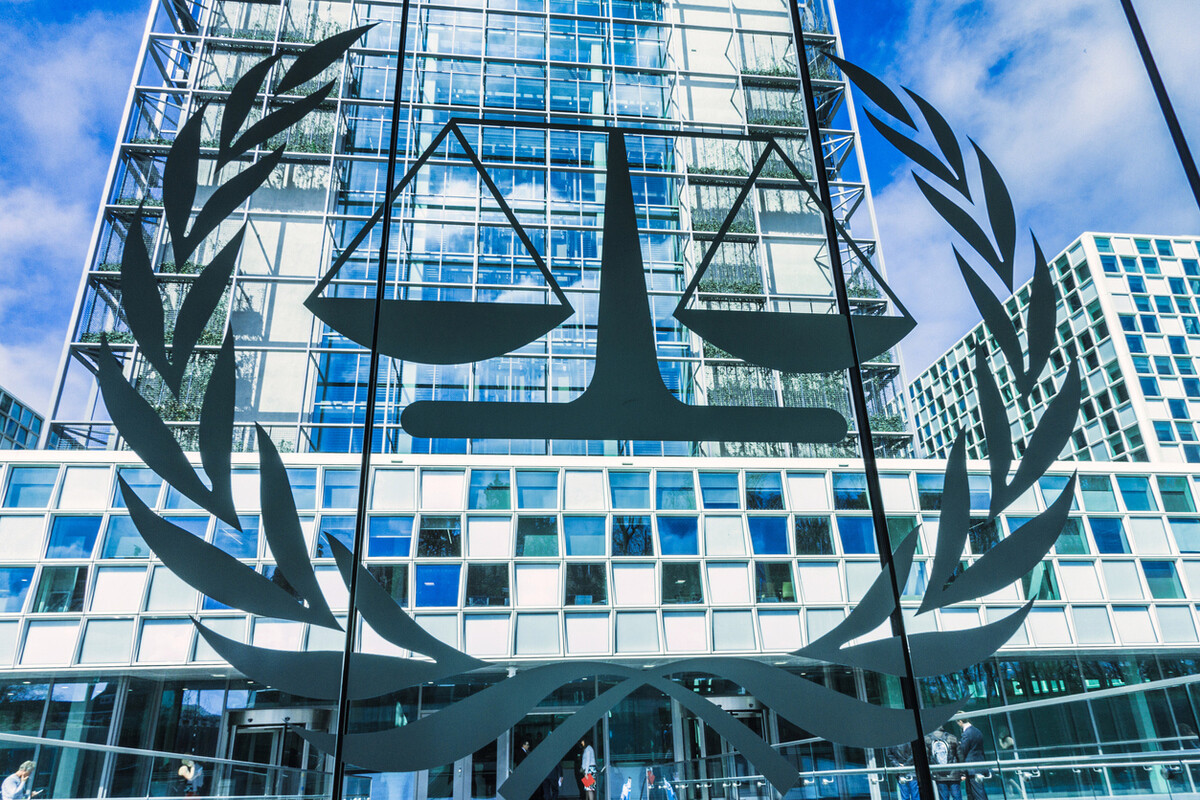
In February 2025, President Trump issued Executive Order 14,203, which authorized sweeping sanctions designed to punish the International Criminal Court (ICC) and those who assist its efforts to investigate and prosecute U.S. and Israeli citizens for potential human rights violations. The effect of the executive order is to make it illegal for Americans to provide “funds, goods, or services by, to, or for the benefit” of the chief prosecutor of the ICC and other sanctioned individuals and groups. In July 2025, acting pursuant to the executive order, Secretary Marco Rubio designated Francesca Albanese, a prominent international human rights expert who serves as the U.N. “Special Rapporteur on the situation of human rights in the Palestinian Territory occupied since 1967.” Secretary Rubio has also designated a number of other individuals and groups, including several ICC officials and the international human rights organizations Al-Haq, Al-Mezan Center for Human Rights, and the Palestinian Centre for Human Rights.
The sanctions against Albanese and others have chilled a wide range of scholarly and political exchange about topics of global importance—activities that are protected by the First Amendment. For instance, the Middle Eastern Studies Association (MESA), a scholarly organization that promotes scholarship and learning about the Middle East, had made plans to invite Albanese to be the featured speaker in an online event scheduled for January 2026. Due to her designation, however, MESA became concerned that it could not proceed with the event without exposing itself and its members to the risk of severe civil and criminal penalties for violating the ICC sanctions restrictions.
In October 2025, the Knight Institute sent a letter to the Treasury Department, which oversees the ICC sanctions regime, seeking assurance that it would not violate U.S. sanctions law for MESA to include Albanese in its event. The letter also expressed concern about the profound chilling effect that the Trump administration’s ICC sanctions restrictions could have on a wide range of academic and political discourse. Two months later, in a significant victory for free speech, the Treasury Department responded that MESA and its members may go forward with its event with Albanese without fear of penalty, and that the U.S. government cannot use its economic sanctions authority to suppress the cross-border exchange of information and ideas.
The ICC sanctions have chilled a wide range of other constitutionally protected activities, too. In April 2026, the Knight Institute sent a letter to the Treasury Department on behalf of foreign policy expert Josh Paul requesting public assurance that serving as an independent, expert witness at the request of counsel representing a sanctioned entity does not violate U.S. sanctions law. Mr. Paul had been asked to testify as an expert in a case before the Federal Court of Canada brought on behalf of several Palestinian and Canadian individuals and the Palestinian human rights organization Al-Haq, an entity designated under the ICC sanctions. Mr. Paul was concerned that serving in that capacity could run afoul of U.S. sanctions law. In response to the letter, the Treasury Department issued a license to Mr. Paul allowing him to go forward with his participation in the lawsuit, albeit for a limited time and subject to certain conditions.
The Knight Institute’s advocacy builds on prior projects, including its lawsuit on behalf of the Foundation for Global Political Exchange challenging the Treasury Department’s decision to prohibit the Foundation from including certain sanctioned individuals in the political discussions that the Foundation hosts.
Press Statements
Analysis
Legal Filings
Click to highlight response chains