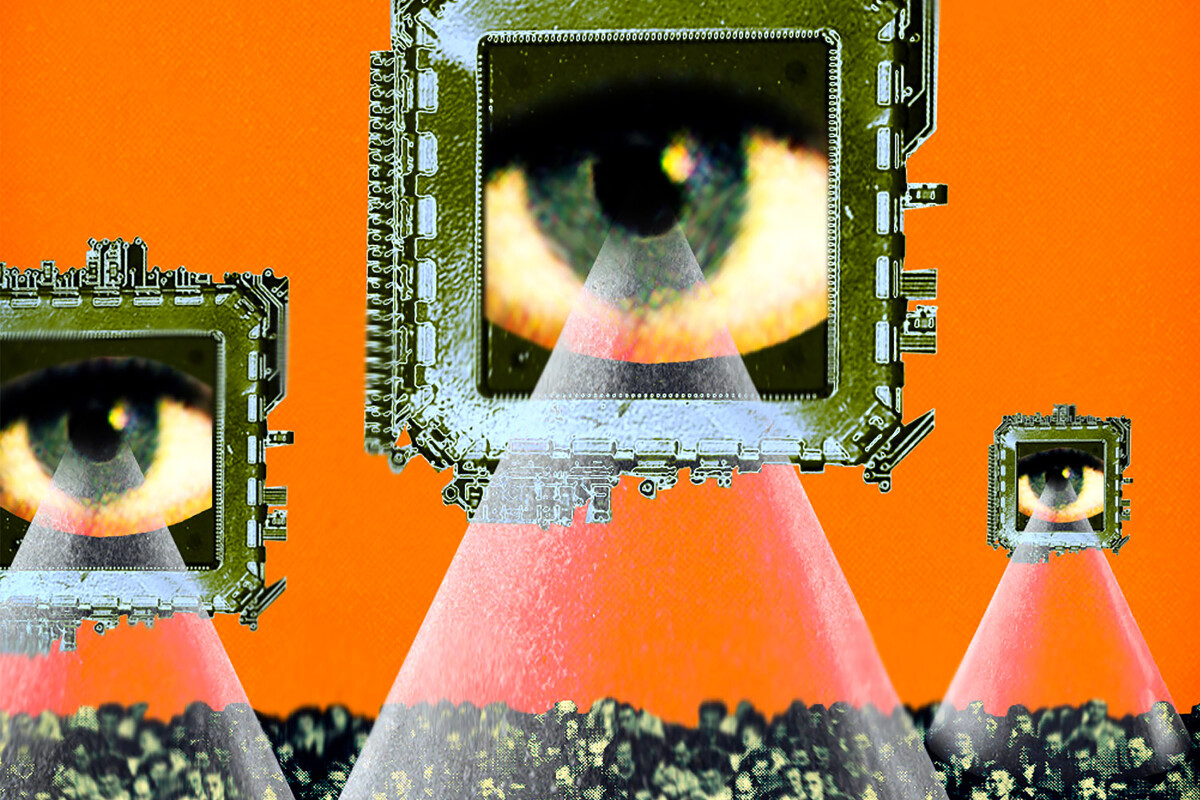
WASHINGTON—Today, the Knight First Amendment Institute at Columbia University, the Reporters Committee for Freedom of the Press (RCFP), and the Foundation for Individual Rights and Expression (FIRE) filed an amicus brief in the U.S. Supreme Court in Chatrie v. United States, urging the Court to hold that indiscriminate geofence warrants violate the Fourth Amendment. Geofence warrants allow law enforcement to compel technology companies such as Google to disclose sweeping amounts of historical location data without individualized suspicion, identifying every device present within a defined geographic area during a specified time period. The groups argue that these dragnet searches threaten core First Amendment activity, including newsgathering and political and religious expression and association.
“The Supreme Court has long recognized the close relationship between privacy and free expression,” said Nicola Morrow, legal fellow at the Knight Institute. “If the government can use location data to indiscriminately and retroactively identify every person who met with a reporter, attended a protest, or visited a place of worship, it creates a serious risk of chilling lawful speech and association.”
Today’s brief urges the Court to apply the Fourth Amendment with special rigor when surveillance threatens First Amendment rights and to hold that warrants authorizing the indiscriminate collection of location information fail the basic constitutional requirements of particularity and individualized probable cause. The organizations contend that geofence warrants invert the Fourth Amendment’s requirement of individualized suspicion by treating everyone within a geographic area as a potential suspect. Instead of identifying a particular person based on probable cause, geofence searches sweep in everyone first and then sift through the data to generate suspicion after the fact. That approach is incompatible with the Fourth Amendment and especially dangerous where First Amendment rights are at stake because it can expose the movements of journalists and their sources, protesters and organizers, and religious congregants engaged in protected activities nearby.
“Few investigative tools are more invasive than those that allow the government to identify who met with a reporter,” said Mara Gassman, senior staff attorney at the Reporters Committee for Freedom of the Press. “There are longstanding safeguards designed to prevent law enforcement from intruding on confidential newsgathering because those intrusions endanger sources and impair public interest reporting. Dragnet location searches bypass those protections and threaten the independence of the press far beyond a single investigation.”
The brief explains that geofence searches exploit vast repositories of phone location history to reveal people’s movements and associations, including activities that sit at the heart of the First Amendment. It warns that, under the government’s approach, investigators could use any purported crime near a newsroom, a demonstration, or a house of worship as a pretext to identify everyone present and reconstruct who met with whom.
"Geofence warrants make it impossible to assemble, protest, newsgather, worship, and more away from the government’s watchful eye,” said Will Creeley, legal director at the Foundation for Individual Rights and Expression. “When our Fourth Amendment rights are at risk in this way, our First Amendment freedoms are, too—and looming technological advances like artificial intelligence make the Bill of Rights’ protection more important, not less.”
Use of geofence warrants has grown in recent years, and the brief points to documented deployments that swept in large numbers of people engaged in constitutionally protected activity. During the summer of 2020, for instance, law enforcement agencies across the country obtained location data for thousands of individuals involved in largely peaceful protests.
The groups urge the Court to reaffirm that the Fourth Amendment plays an essential role in protecting First Amendment rights from unjustified and unprecedented surveillance in the digital age.
Read today’s amicus brief here.
Read more about the case here.
Lawyers on the case include Nicola Morrow, Jake Karr, and Alex Abdo for the Knight First Amendment Institute; and Bruce D. Brown, Lisa Zycherman, Gabriel Rottman, Mara Gassmann, and Grayson Clary for the Reporters Committee for Freedom of the Press.